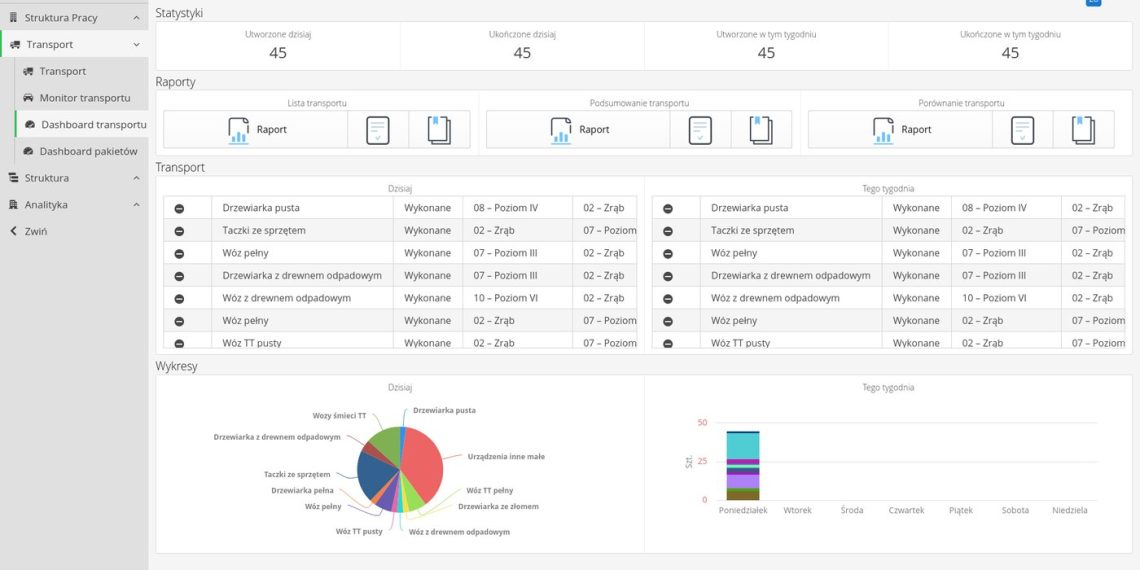
Case Study: Migration from AMAGE Desktop to AMAGE Web — vertical transport management at the Wieliczka Salt Mine
About the client – Wieliczka Salt Mine
The Wieliczka Salt Mine is an enterprise with centuries of tradition. It is one of the oldest companies in Europe. It was a production plant as early as the 13th century and for subsequent centuries it co-created the strength of the Polish economy, supplying salt to tables across almost all of Europe. Today it is one of the most visited places in Poland and still an active mining plant, where intensive protection works are carried out to safeguard the historic site. Besides its purely tourist tasks, it is a mining plant with all the obligations that come with it. This case study focuses on the shaft department, which organises the transport of materials needed for all renovation, protection and technical works supporting tourist traffic.
The challenge
In 2018 AMAGE Systems implemented, based on its own software package, a solution supporting vertical transport management at the Wieliczka Salt Mine. It made it possible to get rid of paper records and facilitated the coordination of works. The solution consisted of software dedicated to mobile devices and software installed on the computers of the department managing vertical transport, for coordinating works, defining new transport tasks and settling transports. The system operated without failures from that moment on, being practically maintenance-free. However, the technological development of software and the growing technical debt (libraries, runtime environments, etc.) caused difficulties in further development or keeping the system fully ready. Therefore, together with the Wieliczka Salt Mine we decided to propose a migration of the vertical transport management system to the latest version of the AMAGE system, already based on web technologies.
Scope of the implementation
The scope included the implementation of specific solutions dedicated to vertical transport management based on the latest version of the AMAGE Software Suite, migrating the necessary functionality and importers, and launching mobile interfaces compatible with the existing mobile hardware of the plant. As a result, the Wieliczka Salt Mine receives a new version of the system with improvements introduced over the years, on the latest available AMAGE technology platform.
Applications „old” vs „new”
The old version of the system was based on the AMAGE application installed on users’ computers. The application was based on the NetBeans platform and was a modular system ensuring operation for many years, also using remote update mechanisms and all the advantages of that platform. Unfortunately, the years took their toll and solutions installed on computers, besides many advantages, also had a significant drawback — they had to be installed. The development of web platforms since then, and the availability and capabilities of web browsers, caused a revolution in the design, implementation and distribution of software. The new versions of the AMAGE system are web applications. This facilitates distribution and installation, makes access of all authorised users to the management platform via a web browser easier, and from a technical point of view also makes monitoring and error correction much simpler.
Data migration from AMAGE Flow
Naturally, the migration to the new technology could not leave the data in the old platform. One of the first tasks was the migration of data from the old system to the new one. Although this was an evolution of platforms, unfortunately years of development of the new platform meant that a simple table migration was not possible. In addition, we also wanted to unify the data handling for vertical transport systems. Over the years of development of the new platform, modules responsible for orders, transport (here rather goods — levels) and other modules appeared, which could take over the functions of sometimes specific vertical transport modules from the old system. Hence the migration process included exporting data from the tables existing in the old system and then merge/split and enrichment operations so that the data could be imported directly into the new system. This ensured full data portability without the need to recreate the old structures in the new system.
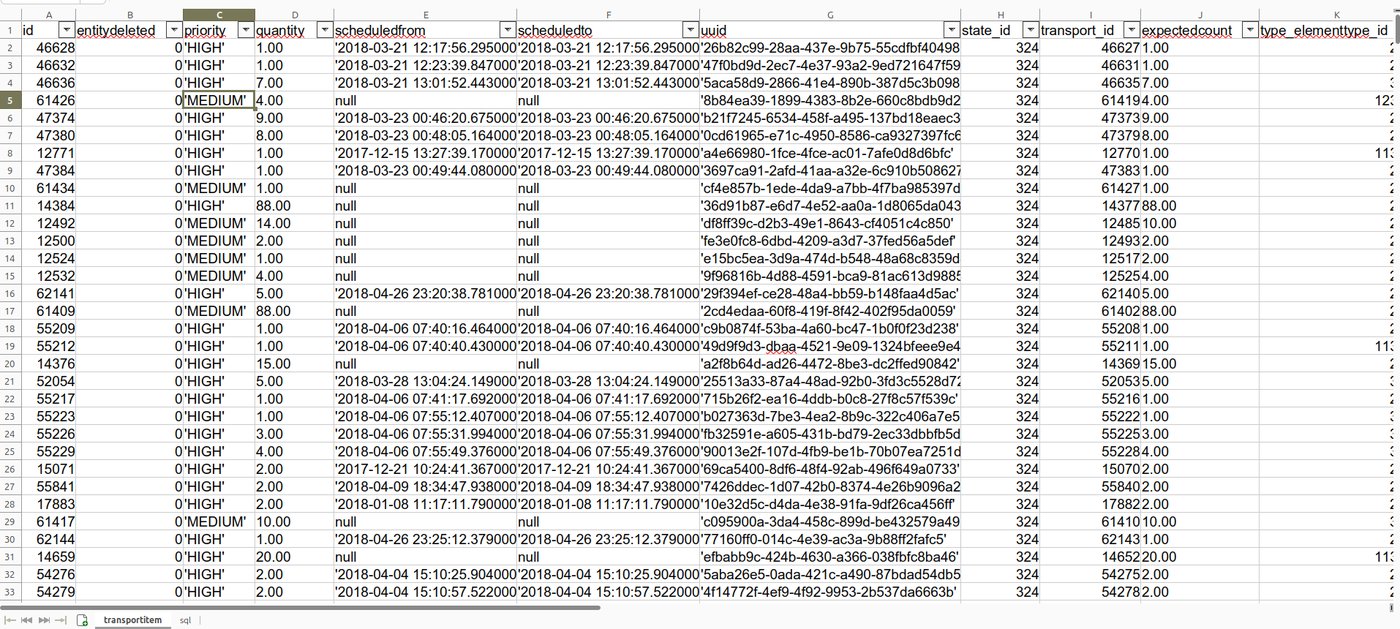
Migration of components specific to vertical transport
The visual layer of the vertical transport system and the modules available there were abandoned. New, already existing modules of the web-based AMAGE Software Suite were used — the transport module, work orders module and element structure module. Small extensions of these modules were introduced to allow their optional configuration for storing information specific to vertical transport. New dashboards were built, migrating the visualisations available in the old system, and several new tiles available in the new system were added. The reports and report layouts dedicated to this client were also migrated to the new platform.
Several importers for data specific to this client were also added — importers of work schedules for external companies, importers of transports and current work schedules, etc. The next step was to use the dedicated AMAGE import tools, which made it possible to load the complete structure of equipment, locations and the functional division of systems. This allowed users to start working in the system with a reflected, real plant structure, without manually entering data.
AMAGE Web version for managers
As a result, a new AMAGE system was launched for the client which, after the implementation configuration, provided the full functionality of the old system on the new platform. The system consists of the work orders module, which allows managing planned transport works for internal departments and external contractors (plant maintenance, renovation works, expansions, etc.).
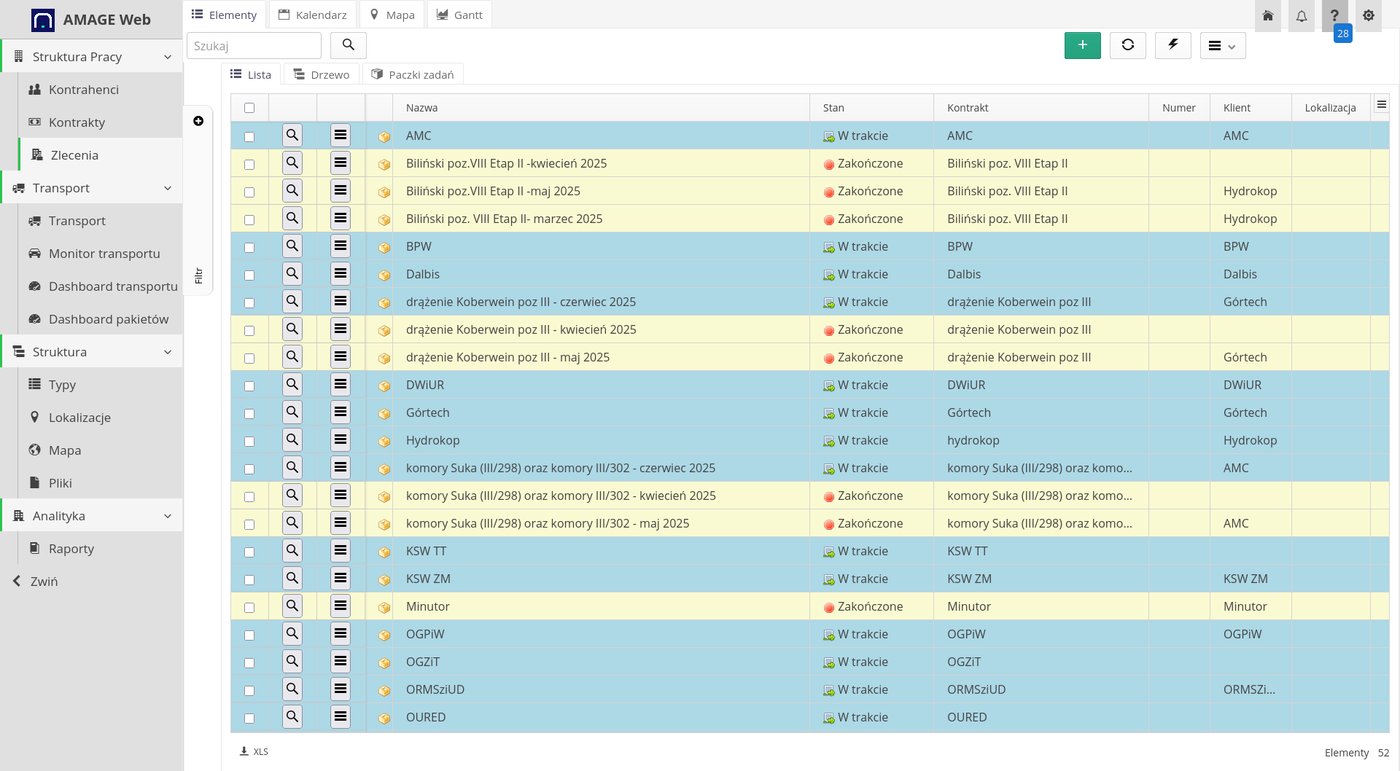
A dashboard with current information facilitates monitoring of the works being carried out and gives quick insight into planned and completed transports.
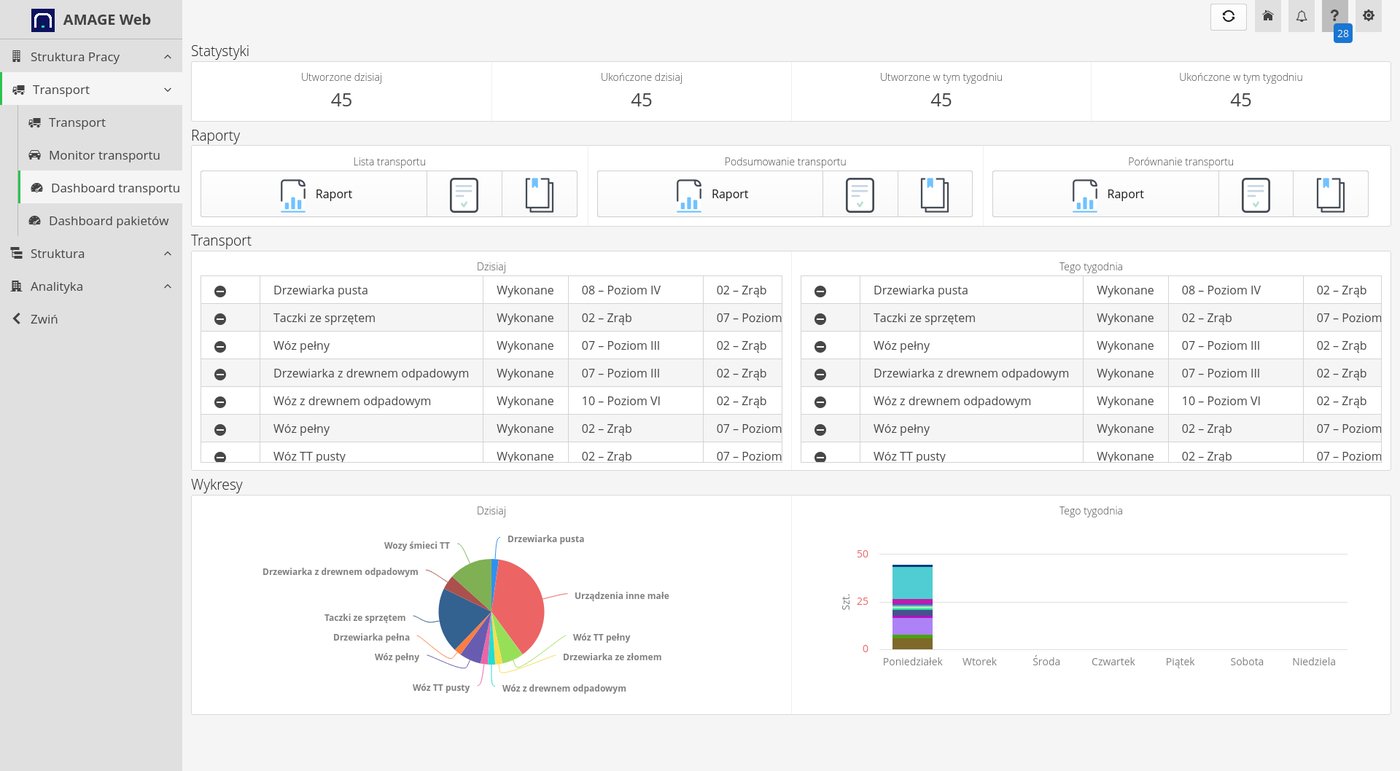
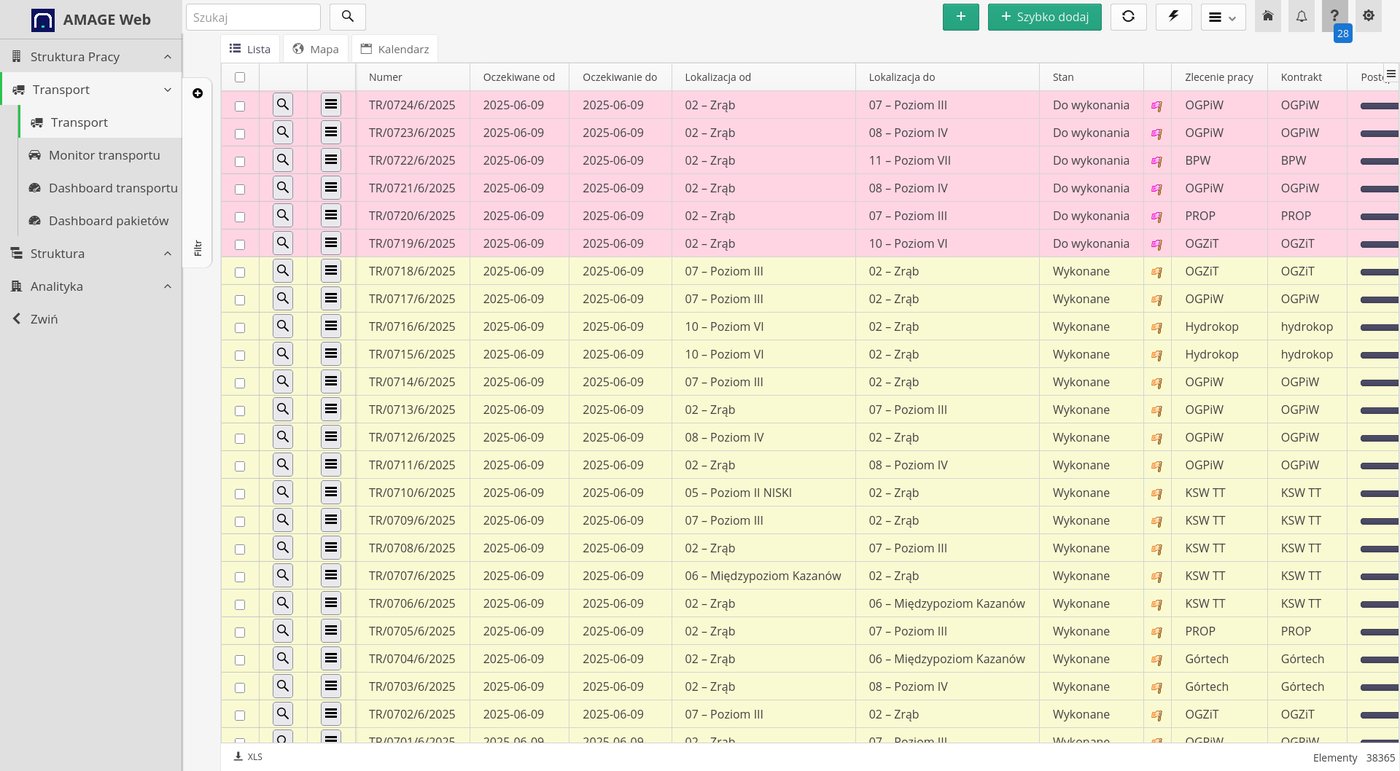
Detailed information about the transports being carried out is available in the views of the transport module. All information entered by the management staff and by the contractors (shaft workers) is located here. The work plan can be imported from external sources and corrected on an ongoing basis in the system.
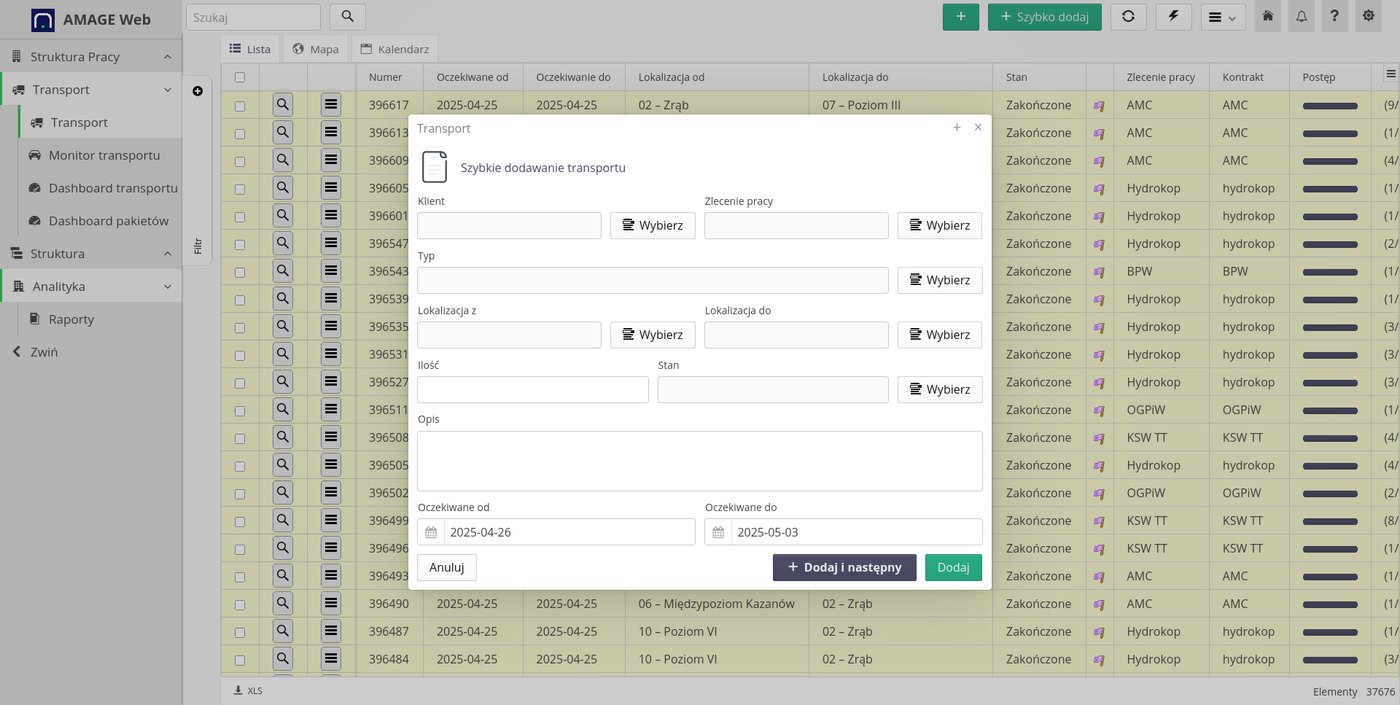
The system also facilitates quick addition of incidental transports with forms that streamline data entry.
AMAGE mobile version for portable devices
The old vertical transport system used the AMAGE mAFx application built with JavaFX libraries. It was a local application that communicated with the main system in online mode via a REST interface. The main task was to maintain the existing hardware platform — rugged mobile devices with the Microsoft Windows operating system. After an initial analysis, we decided to also replace this component using the AMAGE system’s mobile interface. This made further system maintenance, updates and diagnostics much easier. The technical debt in the old application was also significant, and migrating to new versions of libraries and components would have meant more work than using the already existing AMAGE system.
A new version of the mobile interface was implemented which visually corresponded to the previously designed application. This fully facilitated the transition of employees from the old version of the application to the new one — all functions, buttons and the interface corresponded to the older version.
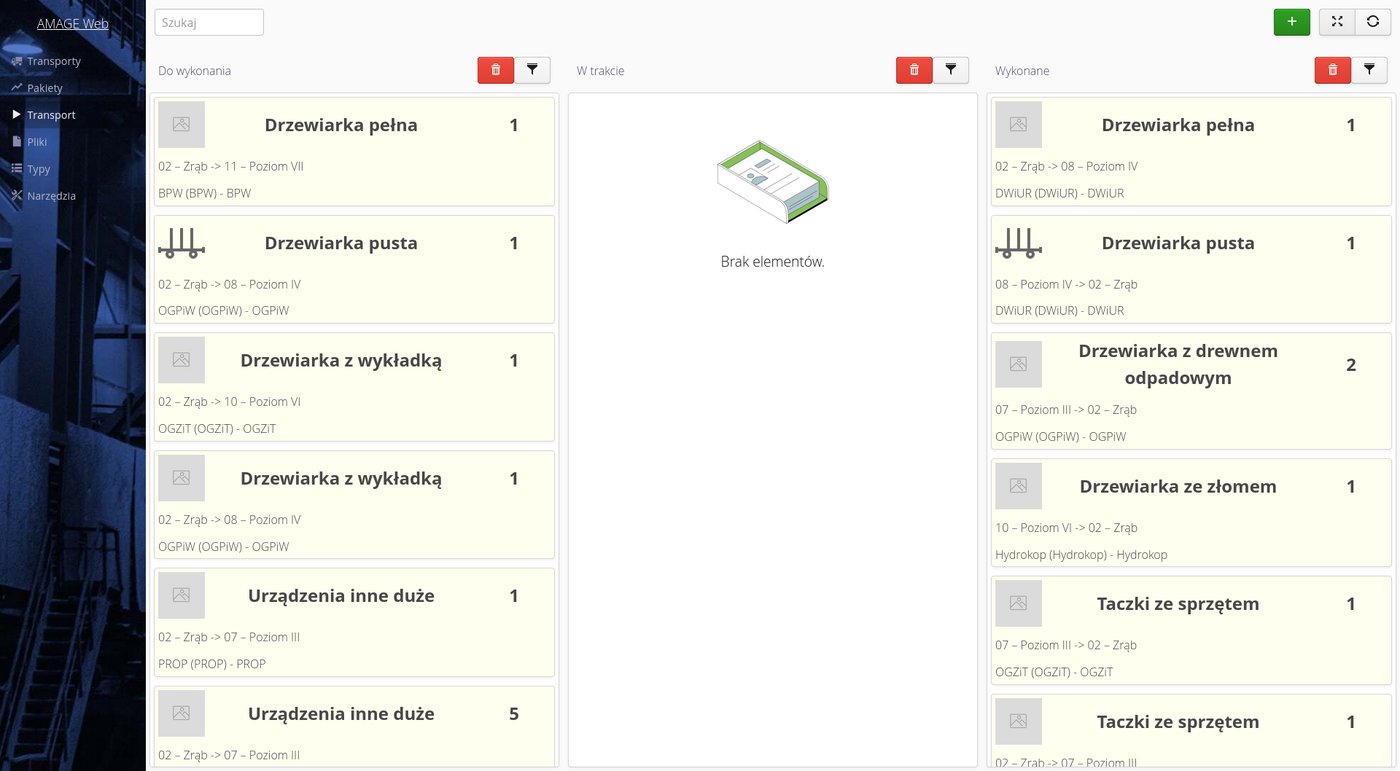
The web application was packaged with the AMAGE starter into an application using Electron/JS components. This allowed keeping a dedicated, transport-only application in the Windows system and configuring the web interface for the specific hardware platform.
Results of the implementation
- Continued failure-free operation of the system using modern technologies was ensured
- All historical data were migrated, allowing uninterrupted work and retrospective analysis of all vertical transport data
- Interfaces and views were modified to ensure backward compatibility while delivering a number of new features
- Access to the system via a web browser was facilitated
- Administrative handling for the client’s IT department was simplified — no software installation and no support to provide for it was a great convenience
Word from the user
“The migration to the new version of AMAGE went smoothly, and the AMAGE team was support at every stage. We are satisfied with the results and with ensuring the continuity of the system’s operation throughout the implementation period. The new features and the look of the application were readily accepted by the employees. The work was carried out impeccably.”
— Krzysztof Rozwadowski, PhD (Eng.), Head of the Vertical Transport Department, Wieliczka Salt Mine
Summary
The migration of the vertical transport system at the Wieliczka Salt Mine from the desktop version to AMAGE Web was an evolution that preserved operational continuity while significantly simplifying the maintenance and further development of the solution. The key element of the project was migrating the historical data along with their transformation into new modules, launching dedicated importers and recreating the required visualisations and reports in the new technology. In parallel, the mobile interface was modernised, keeping the layout and work logic known to users, so the transition to the new platform was smooth for the operational team.
As a result, the client received a modern web system accessible from a browser, easier to administer, monitor and update, with a full reflection of the processes so far and additional improvements resulting from the capabilities of the AMAGE Software Suite. The project confirmed that a well-planned migration makes it possible to reduce technical debt, increase platform flexibility and preserve the habits of end users at the same time.
About us – AMAGE Systems
Founded in 2016, AMAGE Systems specialises in delivering practical IT solutions that bring measurable benefits in a short time. Our systems support manufacturing plants, especially those in continuous production, in areas such as breakdown management, access to equipment documentation and advanced solutions for technical rounds and inspections. Thanks to our applications we ensure safety for complex technological installations, comfort in managing their operation and access to key information at any time and place. Our solutions guarantee a real reduction of losses caused by breakdowns and unforeseen downtime, as well as significant savings through efficient resource management.